


HOA Fees in Greater Baton Rouge (2026): What Buyers Pay, What's Covered, and How Condos Differ from TownhomesBy Kevin Young, REALTOR® | Kevin's Corner | Baton Rouge Real Estate Market
Scotch & Whisky: The Velvet Shadow
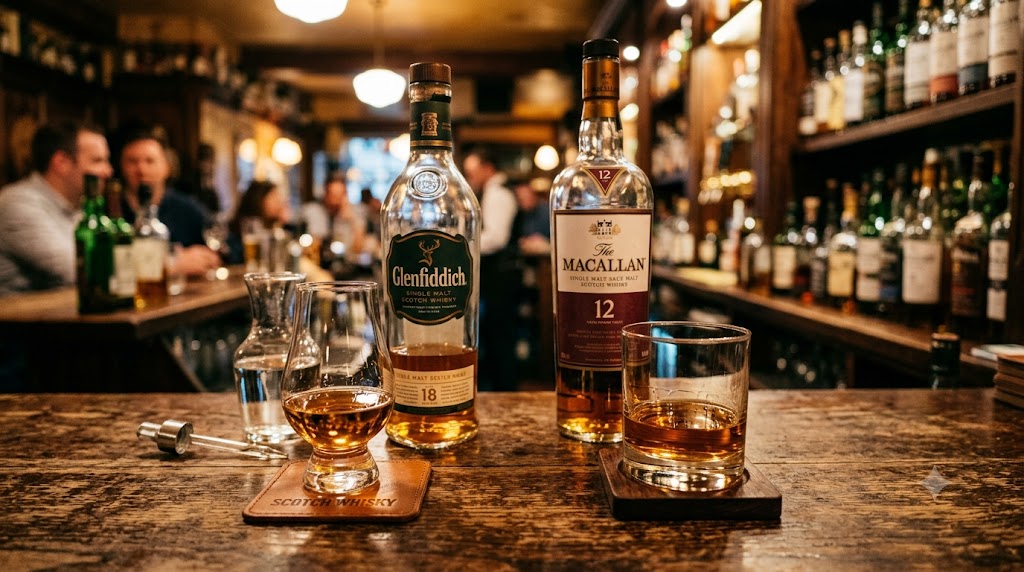
In the rolling green hills of Scotland and across the bourbon belt of Kentucky, a strange organism creeps silently across tree bark, fence posts, and the walls of nearby homes. It is matte black, velvety to the eye, and nearly impossible to scrub away. It is Baudoinia compniacensis, better known as the "whisky fungus," and for centuries it has acted as nature's most reliable informant against the world of illicit distilling.
The story of this peculiar organism is one of biology, taxation, law enforcement, and modern litigation woven together by the simple, aromatic fact that whisky breathes. Every year, aging spirits surrender roughly 2% of their volume to the air around them through porous oak casks. Distillers call this the "Angel's Share." The whisky fungus, it turns out, has been collecting that divine tithe long before any angel ever got the credit.
A Fungus With a Single Appetite
Baudoinia compniacensis is not a generalist. It does not colonize rotting wood or damp basements the way most molds do. Its singular fuel source is airborne ethanol vapor; it is, in the most literal sense, an alcohol-dependent organism shaped entirely by its proximity to fermenting and aging spirits. Scientists have confirmed that the fungus grows with remarkable speed and density in environments where ethanol concentrations in the surrounding air are consistently elevated, making it a near-perfect biological indicator of distillery activity.
The fungus was formally classified and named by mycologist James Scott of the University of Toronto in 2007, though its presence near distilleries had been observed and documented anecdotally for well over a century before modern science gave it a name.
Its physical characteristics are striking in their uniformity. The organism produces a thick, continuous crust of dark pigmentation that adheres firmly to virtually any surface it colonizes: masonry, glass, painted wood, vehicle exteriors, and natural stone. The coloring is not incidental; the dark melanin compounds the fungus produces are believed to protect it from ultraviolet radiation and physical stress, allowing it to persist across seasons and weather conditions that would destroy less resilient organisms.
The Accidental Informant: How the Fungus Caught Moonshiners
Long before it was classified or studied, Baudoinia compniacensis was performing an involuntary but highly effective public service: betraying the locations of illegal stills to the tax collectors of the British Crown.
In 18th and 19th century Scotland and Ireland, illicit distilling was not merely a cottage industry; it was a deeply embedded cultural institution. Highland communities in particular had been producing uisge beatha, the Gaelic "water of life," for generations before formal taxation regimes were imposed. When the British government began aggressively collecting excise duty on spirits, an entire shadow economy of illegal distillers emerged, hiding their operations in remote glens, beneath peat bogs, and inside converted farm buildings specifically chosen for their concealment.
Excise men, known colloquially as "gaugers," were often outwitted by the ingenuity of Highland distillers, who developed elaborate systems of lookouts, decoy equipment, and underground tunnels to hide their operations. Yet the fungus did not care about any of it.
The gaugers learned, likely through accumulated practical observation, that a cluster of trees inexplicably stained black in an otherwise ordinary forest was not a natural phenomenon. It was a receipt. The ethanol vapors drifting invisibly from a hidden still were settling on surrounding vegetation, feeding the fungus, and painting a dark map straight to the source. A clever distiller could cork every bottle and bury every pipe, but he could not prevent the air itself from advertising his presence.
This biological betrayal was particularly effective because the fungus accumulates over time. A still that had been operating for even a few months would leave a visible signature on nearby trees that persisted long after the equipment was moved. Gaugers could identify old sites and watch them for renewed activity, or trace the gradient of fungal growth back toward a more recent and active location.
The Modern Problem: Industrial Scale and Legal Battles
What was once a quirky footnote in the history of excise enforcement has, in the 21st century, become a serious legal and environmental controversy. The difference is one of scale. A single hidden still in a Highland glen might coat a few dozen trees in black. A modern industrial distillery aging millions of barrels simultaneously releases ethanol vapor on a scale that transforms entire neighborhoods.
Residents living adjacent to large-scale whisky warehouses and rackhouses in Scotland, Canada, and the United States have documented the progressive blackening of their homes, vehicles, garden furniture, and fencing. The fungus is extraordinarily difficult to remove and recolonizes treated surfaces rapidly as long as the ethanol source persists. Standard cleaning products are largely ineffective; the organism's melanin-reinforced cell walls give it a physical resilience that frustrates conventional remediation efforts.
In multiple documented cases across Kentucky and Tennessee, homeowners living within a half-mile of large bourbon warehouses have reported that repainting exterior surfaces provides only temporary relief; the fungal crust returns within months, driven by the constant atmospheric supply of evaporating spirit.
Legal action has followed. Several class-action lawsuits have been filed against major distilling operations, with plaintiffs arguing that the persistent fungal contamination constitutes a nuisance that diminishes property values and quality of life. The legal arguments are complicated by the fact that Baudoinia compniacensis is not classified as a pathogen or a health hazard; it is biologically inert to humans. Courts have therefore been required to weigh property damage and aesthetic harm against the economic and cultural significance of established distilling operations, often with mixed and inconsistent results.
In Scotland, where the Scotch whisky industry generates billions of pounds annually and carries enormous national and heritage significance, local councils and regulatory bodies have struggled to establish clear standards for what constitutes acceptable fungal impact on surrounding communities. The tension between industrial legacy and residential rights remains unresolved in most jurisdictions where the issue has arisen.
What This Means for Property Near Distilleries
For prospective buyers and existing homeowners, the presence of a major distillery or whisky warehouse in the surrounding area carries implications that extend well beyond the romantic image of aging barrels and amber spirits. Properties within the documented ethanol dispersal radius of large rackhouse operations may face ongoing maintenance costs associated with fungal remediation, potential stigma in resale negotiations, and the unresolved legal landscape surrounding liability for cosmetic and structural damage caused by persistent biological colonization.
These concerns do not apply uniformly. Smaller craft distilleries operating fewer barrels produce ethanol vapor at a scale insufficient to generate significant fungal accumulation beyond their immediate perimeter. The risk scales directly with the volume of spirits being aged and the proximity of residential structures to warehouse facilities. Due diligence for any property purchase in a region with active large-scale distilling operations should include an assessment of prevailing wind patterns, warehouse proximity, and any existing community complaints or legal proceedings related to fungal contamination.
~2% Annual volume of whisky lost to the "Angel's Share" through evaporation from oak casks
2007 Year Baudoinia compniacensis was formally classified and named by mycologist James Scott
0.5 mi Approximate radius within which significant fungal accumulation has been documented near large rackhouse facilities
3 Nations Countries with documented high-profile litigation over whisky fungus property damage: Scotland, Canada, and the United States
Curious how this impacts your property value?
Let's Find Out!Frequently Asked Questions
FAQ
Is the whisky fungus dangerous to human health?
Current scientific consensus holds that Baudoinia compniacensis is not a human pathogen and poses no documented direct health risk to people living near affected areas. It does not produce toxic spores or allergens at levels associated with illness. The primary concerns raised by residents and courts are cosmetic and economic: persistent staining of surfaces, difficulty in remediation, and potential impacts on property values and marketability. That said, ongoing research continues to characterize the organism more fully, and regulatory classifications may evolve as more data becomes available.
FAQ
Can the whisky fungus be permanently removed from affected surfaces?
Permanent removal is not currently achievable while an active ethanol vapor source remains nearby. Standard pressure washing and bleach-based treatments can temporarily reduce the visible accumulation, but the fungus recolonizes treated surfaces rapidly because the atmospheric fuel source is continuous. Some residents near large distilleries have experimented with antifungal coatings on exterior surfaces, with limited and inconsistent results. Effective long-term remediation would require either a significant reduction in the ethanol vapor being released by the neighboring facility or the physical relocation of the affected structure away from the dispersal zone.
FAQ
How did tax collectors historically use the fungus to find illegal stills?
British excise officers, called gaugers, learned through practical field experience that clusters of trees or vegetation inexplicably coated in a dark, matte-black crust in otherwise normal woodland were a reliable indicator of nearby illicit distilling activity. The ethanol vapors produced by a hidden still would drift outward invisibly and feed the alcohol-dependent fungus on surrounding surfaces over weeks and months, creating a visible biological trail. Because the fungal staining persisted even after equipment was moved, gaugers could also identify abandoned sites and monitor them for resumed activity. The fungus effectively functioned as an involuntary, always-on surveillance system that no amount of physical concealment could defeat.
Sources
- Scott, J.A., et al. (2007). "Baudoinia, a new genus to accommodate Torula compniacensis." Studies in Mycology, 58: 1-14.
- University of Toronto, Department of Laboratory Medicine and Pathobiology. Research profile: James Scott on Baudoinia compniacensis.
- Scotch Whisky Association. Industry environmental and community impact documentation.
- Associated Press. "Whiskey fungus lawsuits multiply near Kentucky and Tennessee distilleries." Various reports, 2012-2023.
- BBC Scotland. "The black fungus that follows the whisky." Feature reporting on community complaints in Speyside and Highland distilling regions.
- United States Federal Court records. Class-action filings related to distillery fungal contamination, Eastern District of Kentucky.
- Bryson, B. (2004). A Short History of Nearly Everything. Notes on industrial biological phenomena.
 The multiple listing information is provided by the Greater Baton Rouge Association of REALTORS®, Inc. multiple listing service from a copyrighted compilation of listings. The compilation of listings and each individual listing are ©2026 MLS. All Rights Reserved. The information provided is for clients' personal, non-commercial use and may not be used for any purpose other than to identify prospective properties clients may be interested in purchasing. All properties are subject to prior sale
